

The Great Famine Voices project brings together Irish emigrants, their descendants, and members of their communities to share family memories and stories.
In doing so, it is creating a poignant record of those who came from Ireland to North America and Great Britain, especially during the period of the Great Hunger but also in the years that followed.
The Great Famine Voices Roadshow is inspired by the search for the 1,490 former tenants who were forced to emigrate to North America from the estate of Major Denis Mahon at Strokestown Park, now the site of the National Famine Museum, at the height of the Great Famine in 1847. It was cheaper for their landlord to pay for their emigration to Canada (via Liverpool) than it was to keep them in the Roscommon poorhouse. Only about a third of them survived traumatic journeys to build new lives in the UK and North America.
The Great Famine Voices Roadshow is an ambitious project that is building a detailed picture of memories and stories about the Irish emigrant experience that are at risk of being lost. The Great Famine Voices project is funded by the Government of Ireland Emigrant Support Programme.
What is the Great Famine Voices Roadshow?
The roadshow brings together people from across Ireland, the UK, and North America through open house events, online events and short films.
Participants share in poignant and uplifting conversations about the experience of leaving Ireland and putting down new roots.
_____________________________
Great Famine Voices Films
The Famine Irish in Glasgow
The Famine Irish in Glasgow (34:58) features Professor Sir Tom Devine, the leading historian on the Irish in Scotland. He reflects on the impact and legacy of the Famine Irish migration to Glasgow in 1847 as well as his own grandparents’ story of relocation from Ulster to Scotland in the later nineteenth century. The film also explores how Celtic Football Club was established to help alleviate the poverty of Famine Irish emigrants and their descendants.
Great Famine Voices San Francisco
Great Famine Voices San Francisco: (25:38) explores the history of the city’s Irish community on a tour led by Myles Dungan (RTÉ Radio 1, The History Show) and Glen Gendzel (San Jose State University). They recount the legacy of Famine Irish emigrants in building the city as well as the impact of the San Francisco earthquake and fire of 1906 on its landmarks such as the Flood Building, St. Patrick’s Church, and Old St. Mary’s Cathedral. They provide an unflinching account of the role of Irish emigrants such as Denis Kearney and Matthew Noonan in fomenting anti-Chinese racism and pay tribute to the inspirational figure of Kate Kennedy, an early public school teacher, and labour activist whose family had fled from famine-stricken Ireland.
From Strokestown to San Diego
From Strokestown to San Diego: In The Midst of Plenty (31:28) brings together the founder and artistic director of Enchanted Croi Theatre Anne-Marie O’Sullivan and composer-lyricist Amy Day who offer a behind the scenes look at the creative process and their inspirations from the Strokestown Park Archive for their spell-binding new production with its hauntingly beautiful and heartbreaking melodies resonant with the fears of eviction, family breakdown, and inconsolable loss in the past and present. The film features audience reaction from the Irish Outreach Center in San Diego.
From Strokestown to London
In From Strokestown to London (25:27) acclaimed poet and performance artist Cherry Smyth counterpoints her impressions of female Famine Irish immigrants in London in the 1840s with her recollections of visiting the National Famine Museum, Strokestown Park, which helped inspire her to create Famished (Pindrop Press, 2019).
She brings viewers on an evocative and spell-binding journey from famine-stricken rural Ireland to the heart of the British Empire at the height of the Great Hunger.
In the Midst of Plenty
The National Famine Museum | Strokestown Park and Irish Heritage Trust have released In the Midst of Plenty in collaboration with Enchanted Croi Theatre to mark the 2023 National Famine Commemoration. Set in 1847 at the height of the Great Hunger, it tells the story of the desperate lengths the starving tenants on the Strokestown estate in Roscommon went to in order to survive, including betrayal, deceit, and violence, when confronted with eviction and mass-migration.
The film showcases some spelling-binding performances from In the Midst of Plenty and explores how it finds inspiration in petitions from the dispossessed and historical records in the Strokestown Park Famine Archive that are transformed into hauntingly beautiful and heartbreaking melodies resonant with the fears of eviction, family breakdown, and inconsolable loss in the past and present.
Ira Aldridge: African Tragedian in Ireland
Ira Aldridge: African Tragedian in Ireland (35:38) tells the story of one of the most remarkable Black Abolitionists in Famine Ireland. Ira Aldridge was unique as an African-American actor and abolitionist who performed and toured in Ireland at the height of the Great Hunger in 1847-1848. His powerful and moving dramatic performances raised awareness of enslavement and persecution for many years, though he remains little known in the country of his birth. The film is made in collaboration with Professor Christine Kinealy from the African American Irish Diaspora Network and Ireland’s Great Hunger Institute at Quinnipiac University
Famine Lessons: Ireland and European Union Aid, Education, and Heritage
Famine Lessons: Ireland and European Union Aid, Education, and Heritage (24:52) marks the fiftieth anniversary of Ireland’s accession to the EU. The film explores and raises awareness about key EU funded programmes in Ireland such as the European Heritage Awards / Europa Nostra Awards of which the founder of the National Famine Museum, Jim Callery, is a recipient, as well as Erasmus + and the life-saving Enhanced Responses to Nutrition Emergencies (ERNE) project. The film is made in collaboration with Concern Worldwide and with funding from the Department of Foreign Affairs Communicating Europe Initiative 2023
The Famine Irish in New Brunswick
The Famine Irish in New Brunswick (36:53) tells the little-known story of the 16,000 emigrants who fled from famine-stricken Ireland in 1847 to the British North American colony (now Canadian province) of New Brunswick. Two thousand of them perished at quarantine stations such as Partridge Island (Saint John), Middle Island (Miramichi), and Hospital Island (Saint Andrews). The film pays tribute to them and the self-sacrifice of their caregivers, such as Dr James Patrick Collins who lost his life on Partridge Island, and Dr John Vondy who died caring for Irish emigrants on Middle Island. It offers a rare glimpse of Partridge Island where six hundred Irish migrants lie buried on a site that has long been closed to the public.
Mary Robinson’s Visit to Choctaw Nation and the National Famine Museum, Strokestown Park
In President Mary Robinson’s Visit to Choctaw Nation and the National Famine Museum, Strokestown Park (22:13), former Irish President Mary Robinson reflects upon her experiences of travelling to the Choctaw Nation of Oklahoma to pay tribute for their contributions to Irish Famine relief in 1847 and opening the National Famine Museum as key events in her Presidency in marking the sesquicentenary of the Great Irish Famine in the mid-1990s. She also recalls her visits to Grosse Île and the Irish Memorial National Historic Site of Canada, and her “Cherishing the Irish Diaspora” Address to both Houses of the Oireachtas as definitive moments of Famine Commemoration.
Frederick Douglass in Ireland
The film gives an overview of Frederick Douglass’s life-changing time spent in Ireland at the beginning of the Great Famine in 1845-1846. Irish actor Kwaku Fortune plays the role of Frederick Douglass and reflects on his legacy for new communities in Ireland.
Inclusive Famine Commemoration: Unionist Perspectives
Inclusive Famine Commemoration explores the perspectives of Unionists in Northern Ireland who reflect upon the Great Famine’s impact and legacy for their communities. An enduring myth about the Great Hunger was that the north-east of Ireland—and so, by implication, Protestants—escaped the ravages of these tragic years. In fact, no part of the country was unaffected, and the Protestant poor suffered as badly as the Catholic under-class. In the almost exclusively Protestant area of Ballymacarrett (now the Newtownards Road) private soup kitchens were set up at the end of 1846. In 1847, 60 per cent of the local population were dependent on this form of emergency relief. In July of that year, leading Orangemen were suggesting that the traditional 12 July commemorations should not take place as a mark of respect to their brethren who had died. The marches did go ahead but without music or festivities. Protestant clergymen were despairing as they had nowhere to bury the dead: the Shankill cemetery, similar to all of the town’s cemeteries, was overflowing, with bodies left unmarked and unburied. Mortality in the Lurgan workhouse was so high that visiting Quakers likened the suffering to Skibbereen in the south-west of Ireland. Inclusive Famine Commemoration: Unionist Perspectives explores the complex history of the Great Famine in the north east of Ireland – now Northern Ireland. It highlights how views of this tragedy are now being re-examined and re-evaluated by members of the Unionist community.
Sharing Ukrainian and Irish Cultural Heritage
In Sharing Ukrainian and Irish Cultural Heritage (32:50), Strokestown Park’s Ukrainian Artist in Residence, Olena Kovaleyvych, reflects on her experiences of coming to Ireland as a result of the war in Ukraine and adapting the UNESCO protected folk art of Petrykivka painting in which she specializes to Irish natural settings. She explores the origins of Petrykivka painting in her native Dnipropetrovsk oblast, the painful history and rekindled memory of the Holodomor or Ukrainian Famine of 1932-33 and some parallels with Ireland’s Great Hunger, and the impact of the Russian invasion on the Ukrainian museum sector. She also recounts her personal story of fleeing the war and finding refuge and a warm welcome in Strokestown Park, where she has become the National Famine Museum’s Artist in Residence. Olena Kovaleyvych shares her craft and reveals how she has been inspired by the natural symbols of Ireland, Northern Ireland, and Ukraine such as the shamrock, Orange lily, and Sunflower to adapt and blend them into a new and vibrant Petrykivka painting style. She also expresses hope that the legacy of peace after prolonged conflict that she has discovered in Ireland and Northern Ireland will become a reality in Ukraine.
The Famine Irish in Liverpool from the Strokestown Park Estate in 1847
The Famine Irish in Liverpool from the Strokestown Park Estate in 1847 (18:02) tells the story of the former tenants who were assisted to emigrate and of their experiences in Liverpool, the main port of embarkation for the trans-Atlantic crossing.
Following in the Footsteps of Strokestown’s Famine Emigrants
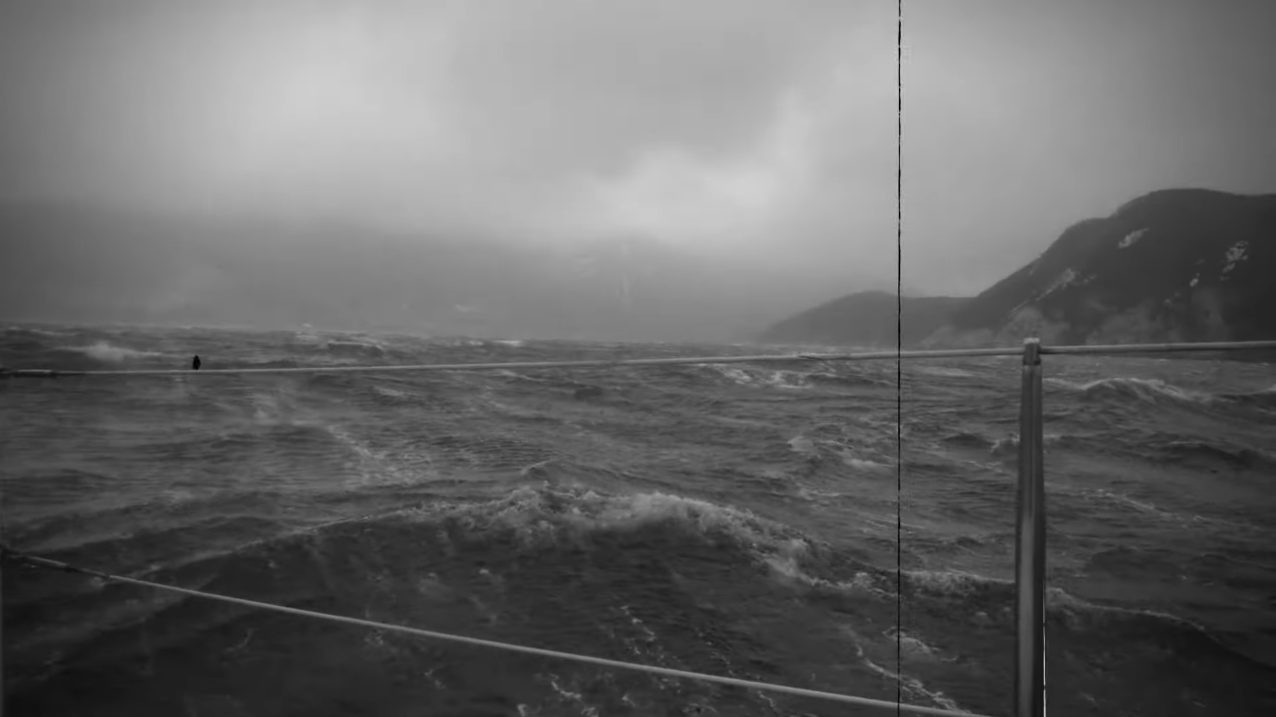
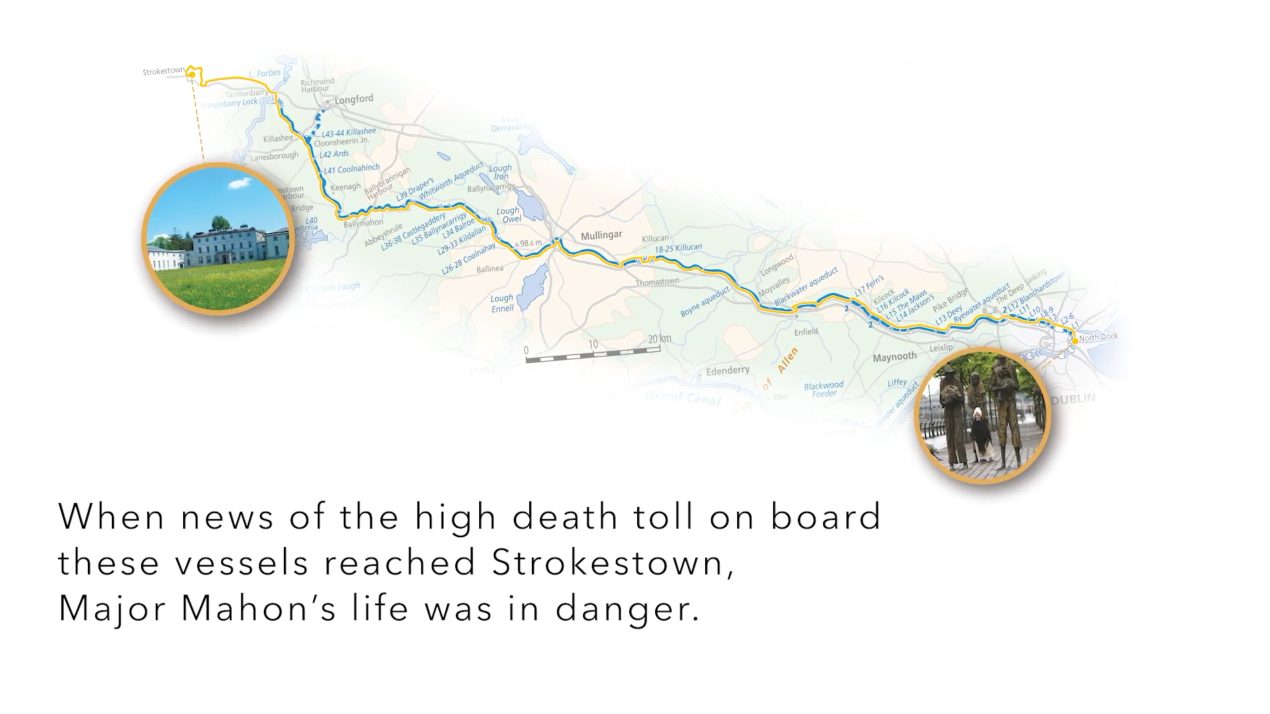
In Following in the Footsteps of Strokestown’s Famine Emigrants (48:53), Professor Mark McGowan tracks their journey from the Strokestown Park House estate in 1847 along the National Famine Way walking trail on the banks of the Royal Canal to Dublin, and then on to Grosse Île and the Irish Memorial National Historic Site and the Niagara region in Canada.
Tracing Strokestown Famine Emigrants on the Welland Canal
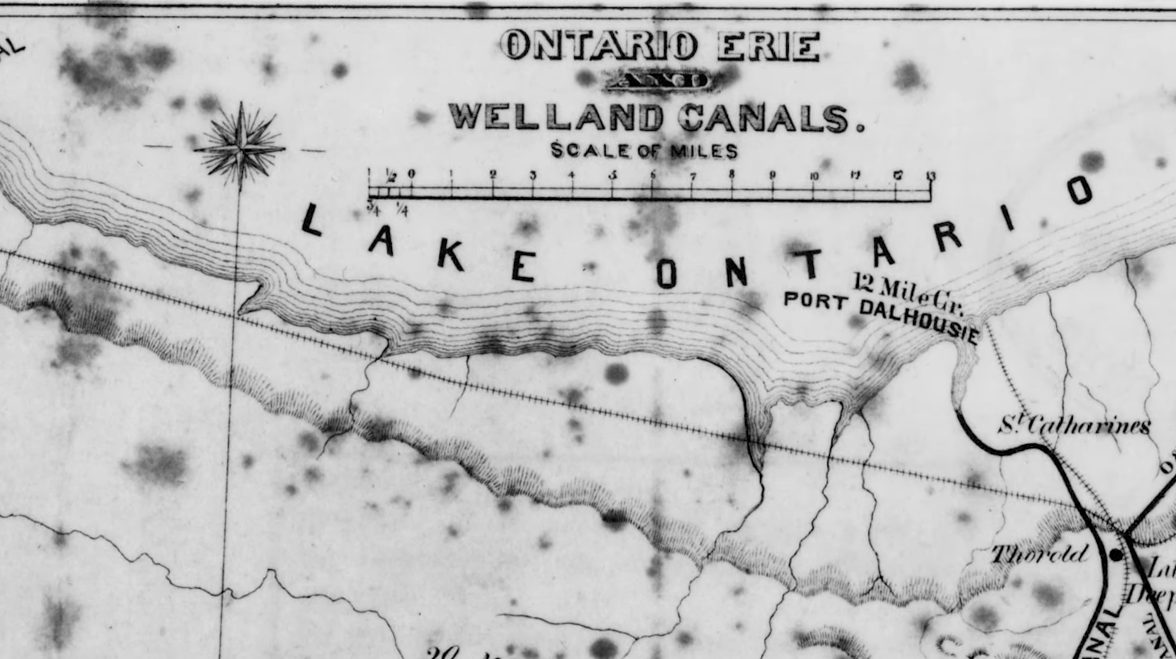
In Tracing Strokestown Famine Emigrants on the Welland Canal (33:58), Professor Mark McGowan uses newly discovered correspondence from the Strokestown Park Famine Archive between the landlord Major Denis Mahon and his agent John Ross Mahon to explain how the 1,490 emigration scheme was planned to resettle former tenants in Canada’s Niagara region.
Strokestown Famine Orphans in Quebec and New York
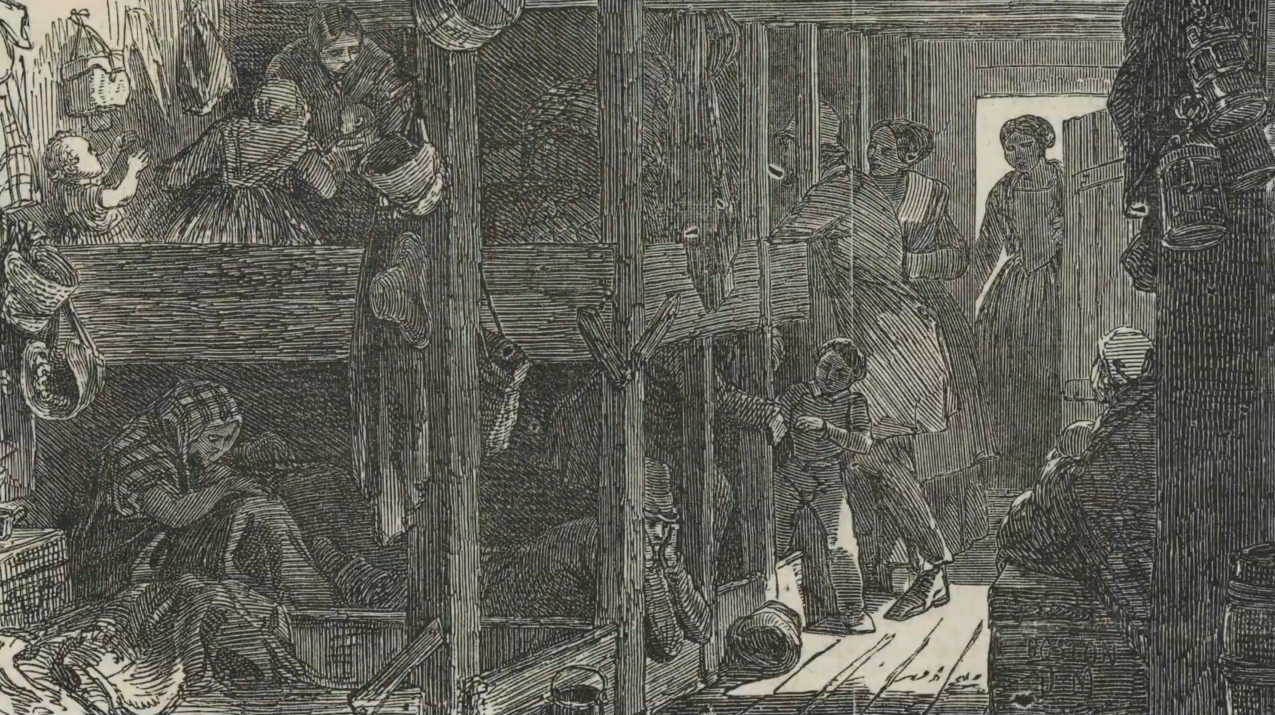
Strokestown Famine Orphans in Quebec and New York (35:14) recalls the harrowing journeys of children from rural Roscommon such as Edward Neary, Patrick and Thomas Quinn, and Daniel and Catherine Tighe who crossed the Atlantic in some of the worst coffin ships in 1847 to start new lives in Canada and the United States. Their sorrowful voyages are recounted by their descendants.
The Story of the Choctaw Gift
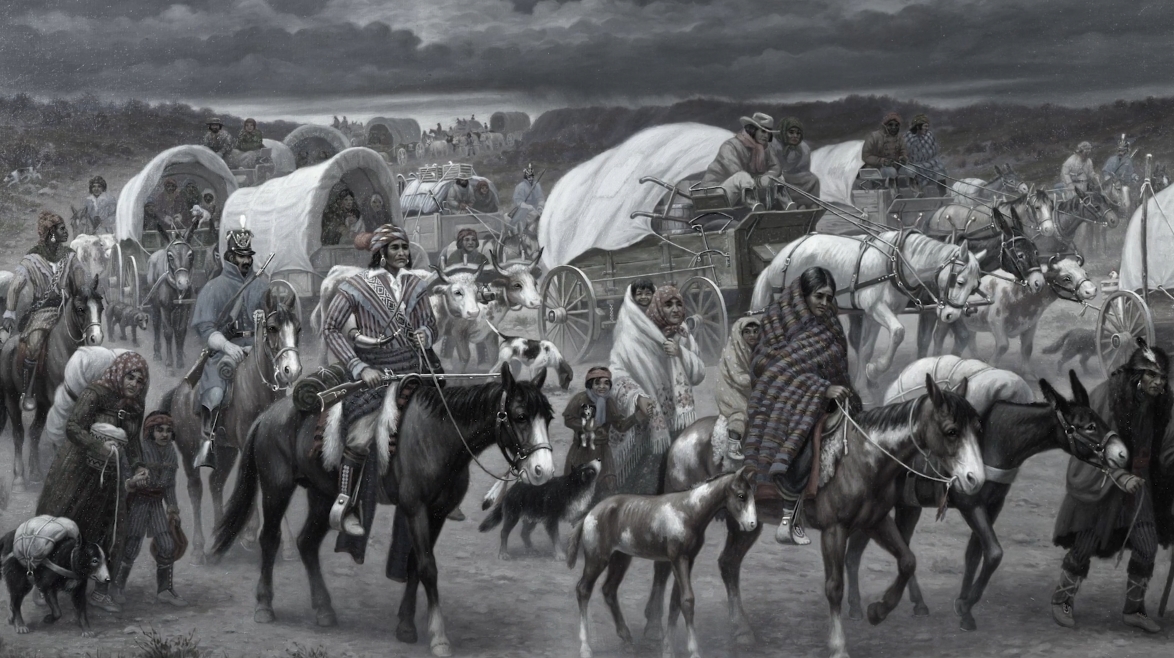
The Story of the Choctaw Gift (28:40) features a musical performance of The Gift in the National Famine Museum at Strokestown Park that pays tribute to the indigenous Choctaw people for their contribution to Irish Famine relief in 1847 shortly after they were expelled from their homeland and forced to embark on the Trail of Tears to Oklahoma.
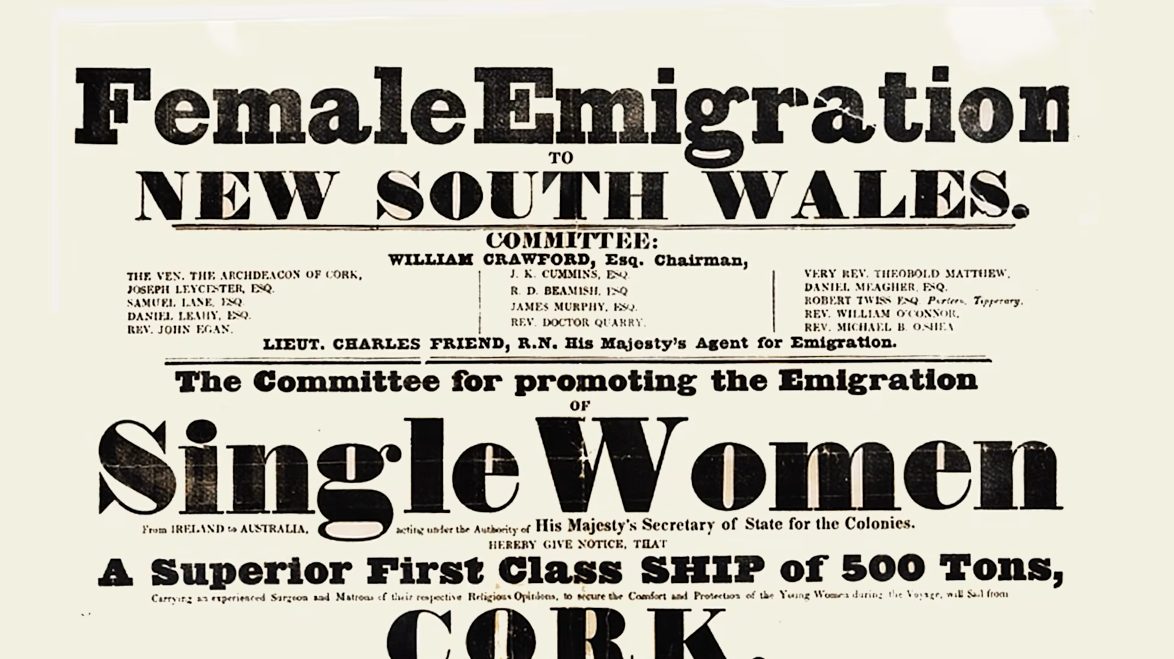
Ireland’s Great Hunger and the Irish Diaspora
Ireland’s Great Hunger and the Irish Diaspora (50:09) explores the historical and socio-political circumstances leading to potato failure, mass starvation and death in Ireland, 1847-52. Narrated by actor Gabriel Byrne, the film includes famine scholars, descendants of famine survivors, emigrants to Quebec, and “Earl Grey” orphan women who emigrated to Australia.
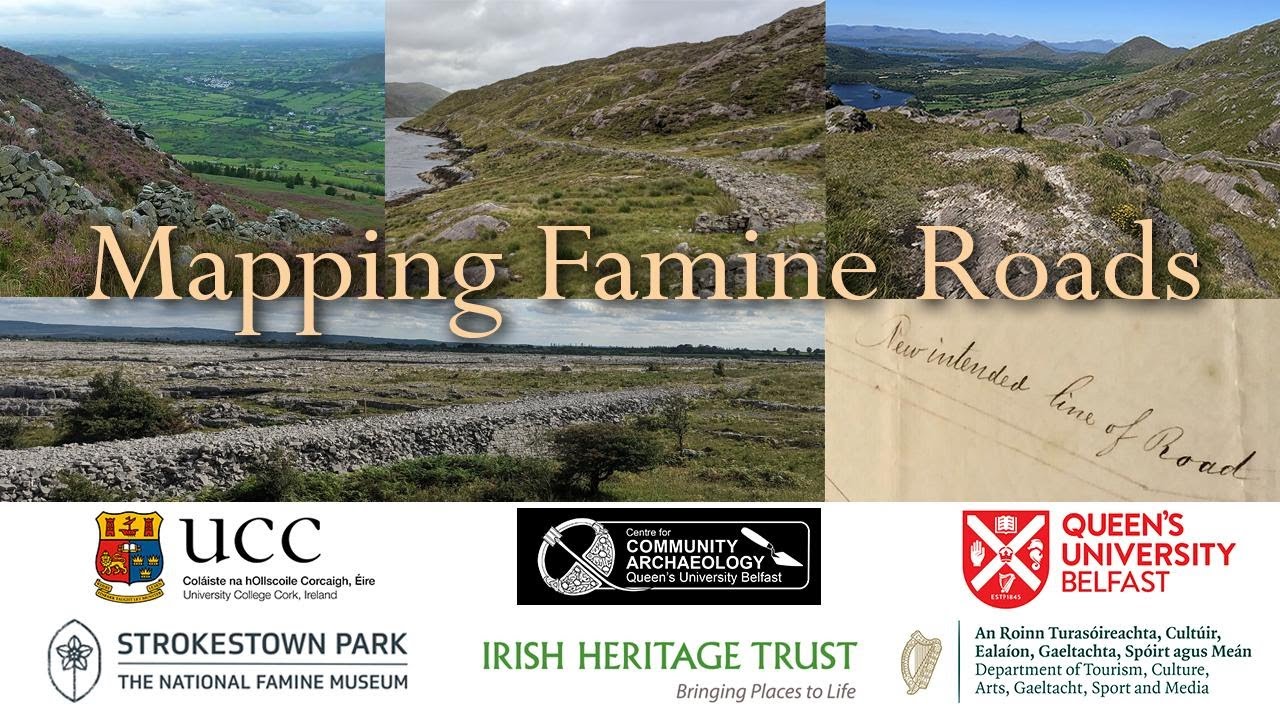
Mapping Famine Roads
Mapping Famine Roads (33:35) explores some of the most desolate and yet beautiful settings where these roads were built on the island of Ireland in the 1840s. The creation of Famine Roads as ostensible relief projects at the height of the Great Hunger in 1847 remains one of its most contentious legacies in both the Republic of Ireland and Northern Ireland. This film brings you on a journey to some of the most remarkable ones and pays tribute to those who built them.
Teaching the Famine: Educational Outreach in Museums
Teaching the Famine: Educational Outreach in Museums (25:42)brings together the National Famine Museum, Strokestown Park, cared for by the Irish Heritage Trust, and acclaimed author of Under the Hawthorn Tree Marita Conlon-McKenna with the Ulster American Folk Park and Enchanted Croi Theatre to explore teaching practices and educational activities about the Great Hunger for students in museum settings.
Irish Famine and Cottier Cabins
Irish Famine and Cottier Cabins (37:20) explores the archaeological remains and cultural and historical legacies of the occupants of fourth class mud and sod single room cabins who were devastated and largely disappeared as a result of the Great Hunger
Songs of the Great Hunger (with Brendan Graham)
Songs of the Great Hunger shares the music of Brendan Graham performed at famine commemoration events in Ireland, Australia, and Canada. Brendan Graham and Eileen Moore Quinn explore the historical experiences of Irish emigrant communities during the Great Hunger that inspired classic songs such as Ochón an Gorta Mór, Crucán na bPáiste, Orphan Girl, The Whitest Flower, and The Voice.
Songs of the Irish American and Canadian Diaspora (with Brendan Graham)
Songs of the Irish American and Canadian Diaspora shares Brendan Graham’s music that was inspired by the historical experiences of Irish migrant communities in the United States and Canada. It features stirring performances of Isle of Hope, Isle of Tears about the arrival of Annie Moore on Ellis Island, March to Battle (Across the Rio Grande) with Liam Neeson and Paddy Moloney and the Chieftains about the San Patricios battalions during the Mexican-American War, the haunting emigrant lament The Fair Haired Boy, the creation of a “transatlantic Ireland” on The Coast of Labrador, and the rousing anthem O, America!. Renowned singers Séan and Dolores Keane, Cathy Jordan, and Anthony Kearns and the Irish Tenors perform these classic songs.
Great Famine Voices Liverpool Irish Festival
The Great Famine Voices Liverpool Irish Festival short film features interviews with members of Liverpool’s diverse Irish community, many of whom are of Famine Irish ancestry.
Montreal’s Grey Nuns and the Great Hunger
In 1847, approximately 75,000 people fled across the Atlantic from famine-stricken Ireland to Montreal. Those suffering from infectious diseases such as typhus were cared for in the city’s fever sheds by the Grey Nuns or Sisters of Charity. The most detailed and evocative eyewitness accounts of the suffering of Famine emigrants in North America can be found in their annals. Discover the stories of James Flood from Strokestown and Rose Brown from Galway who were cared for by the Grey Nuns after losing their parents. Learn about the miracle of Rose’s marble which led to her reunification with her mother and vocation to join the Grey Nuns as Sister St. Patrice.
William Henry Lane “Master Juba” – the Father of Tap Dance
Master Juba is widely recognized as the father of tap dance, yet little is known about his personal life. He visited Ireland in 1849, when the country was slowly emerging from a devastating famine. Juba used his remarkable artistry to challenge stereotypes while also creating a new form of entertainment.
Sarah Parker Remond – A Feminist Abolitionist in Ireland
Sarah Parker Remond – A Feminist Abolitionist in Ireland tells the story of her visit to Ireland in 1859 to win support for anti-slavery, even as her own country was hurtling towards a bloody civil war. She followed her brother, fellow abolitionist Charles Lenox Remond, who lectured in Ireland on the eve of the Great Famine. A life-long friend of Frederick Douglass, Sarah made her own unique contribution to abolition on both sides of the Atlantic.
Elizabeth Taylor Greenfield: The Abolitionist “Black Swan”
In Elizabeth Taylor Greenfield: The Abolitionist “Black Swan” (30:46), Christine Kinealy shares the inspiring story of a female Black Abolitionist who became a singing sensation and found her voice on tour in Famine era Ireland. Born into slavery, Elizabeth became known in her life-time as the Black Swan: she broke down barriers wherever she sang. She first performed her most striking Abolitionist ballad “I’m Free” before an enraptured audience in Dublin.
William P. Powell: A Black Abolitionist in Ireland
William Peter Powell is generally overlooked in the history of the Black abolition movement. Nonetheless, as a former seaman, from his homes in the ports of New Bedford, New York and Liverpool, he was at the heart of a global network of anti-slavery activity, primarily centred on the nexus between Dublin, Liverpool and Boston. He travelled to Ireland at the end of the Great Famine on the Abolitionist lecture circuit.
Count Strzelecki’s Legacy: A Polish Irish Famine Hero
In 1847, Count Paweł Edmund Strzelecki provided aid to the most destitute in the west of Ireland for the British Relief Association and helped feed over 200,000 hungry children in schools. This film tells his story and explores his legacy from the perspective of Polish communities in Ireland today.